
Annapolis Blues FC: The Rise of Local Soccer and What It Means for Fans
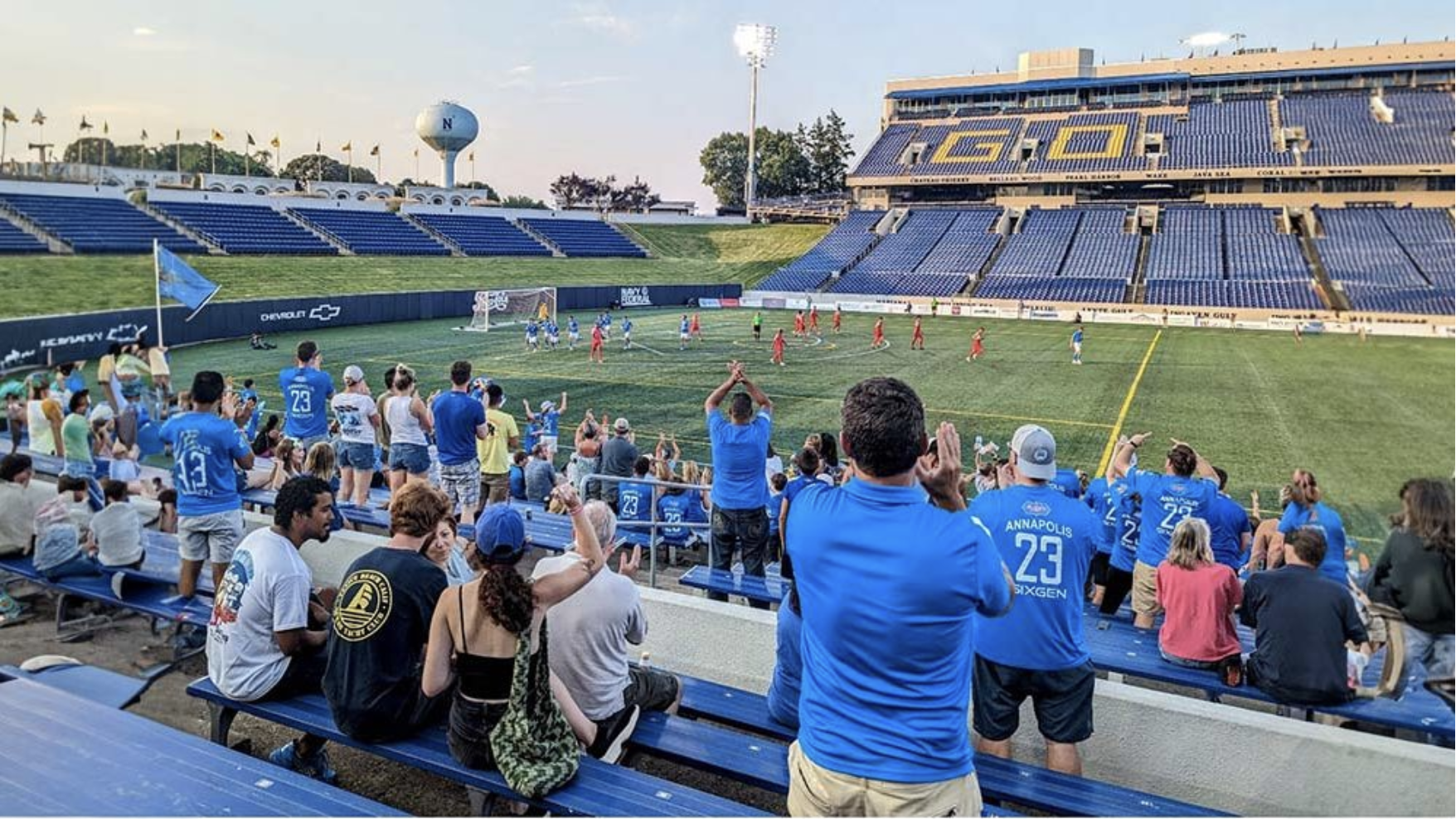
The Annapolis Blues have changed local sports culture in just a few seasons. It was founded in 2022 as a men’s pre-professional club and launched with a campaign that saw thousands of local soccer fans vote on the name and crest. The club aims to grow the sport in Annapolis through its community first philosophy and supportive fanbase. Annapolis Blues shattered attendance records with a crowd of over 12,000 at Navy-Marine Corps Memorial Stadium. The club now has both men and women teams as well as offers fans high-level soccer and affordable family entertainment.
A New Chapter for Annapolis Soccer
Annapolis’s soccer chapter began in earnest when Annapolis Blues FC launched with a community-first approach. In 2022 thousands of local residents voted on the team’s name and crest, giving fans an immediate sense of ownership. The club’s mission from Day One was to grow soccer in the city through a “community-first philosophy”. That strategy has paid off. By the end of the second season the Blues were already “nationally recognized as a force in pre-professional soccer”. Both the men’s and women’s sides won their regional championships in back-to-back years.
In 2023, the men’s team went surpassed in the Mid-Atlantic region and got Coach Colin Herriot a national NPSL Coach of the Year award in the Blues’ inaugural season. Meanwhile in 2025 the women’s team, under coach Ashly Kennedy, captured its first conference title and even secured a USLW Coach of the Year reward. Such on-field success in a fledgling club speaks to the organization’s strong foundation.
The Blues have also been moving up the soccer ladder. After starting in the National Premier Soccer League, the team moved to USL League Two to compete at a higher level and raise the standard of soccer in the region.This move showed the team’s serious ambition and offered fans a chance to see their team compete at a higher level. The ownership group includes well-known figures, including former U.S. national team midfielder Kyle Beckerman and local business leaders, so the plan has both sports and community backing. Together, these developments made Annapolis Blues not just another local club, but a pillar of Maryland soccer with a growing reputation on and off the field.
The rapid rise of the Blues has even sparked interest beyond the stadium, as sports-themed digital platforms increasingly look to local clubs and fan culture for inspiration when designing soccer-inspired games and interactive features.
Explosive Fan Interest
What truly sets the Blues apart has been the fan response. Record-breaking attendance numbers tell the tale: the club shattered expectations almost immediately. The Annapolis Blues game drew 12,853 fans, an all-time USL League Two record. This is higher than what many fully professional teams manage. Even more impressive, the team averaged roughly 8,700 fans per match that season.Those figures led the entire USL League Two (the fourth tier of U.S. soccer) and outdrew many teams one or even two tiers higher. Fans filled seats at Navy–Marine Corps Memorial Stadium (capacity 34,000) well above the usual amateur levels. At peak games the stands became a blue sea, reminiscent of professional games.The club initially hoped that drawing 3,000 to 4,000 fans per game would be a success, but those expectations were quickly surpassed when crowds far exceeded that number.
Annapolis Blues games have seen similar energy in their own way. One USL League Two game in 2025 attracted 12,853 fans, filling the stands to celebrate local soccer. The rise has not been limited to men’s matches. The women’s Blues team has also drawn big crowds, the average around 5,000 fans per game and breaking the USLW league’s single-game record with 7,289 audiences. These turnout numbers are more than just trivia: they brought in sponsors and revenue. In fact, the club’s revenue passed $1 million in 2025, a milestone for a team that started as an amateur project. The sheer volume of fans has even prompted talk of turning pro. Every time Blues attendance tops 10,000, executives ask if the time has come to apply for professional league status.
This growth is visible at every game. On any given match night, supporters fill bleachers, tie blue scarves to railings, and bang drums. A supporters group nicknamed the “Bay Bhoys” (a nod to Annapolis’s Chesapeake Bay location) helps lead chants and waves flags in the stands. The crowds bring heat and color, a renewal of stadium life many never expected for a young club. As the official Blues site later reflected, “record-breaking crowds” and “incredible moments” have defined the club’s third year, turning fans’ passion into a tangible phenomenon.
Build a True Community
Strong fan engagement did not happen by accident. The Blues made deliberate efforts to weave themselves into the community. Their marketing and outreach speak directly to local pride. For example, the owners emphasize Annapolis and the Naval Academy’s legacy by choosing the Navy–Marine Corps Memorial Stadium as home turf. They launched family-friendly programs like “Kicks for Kids,” charity events, and youth clinics to involve young people. The club even brought families into the fold by asking locals to become “host families” for players, a classic move from soccer culture abroad. These efforts make fans feel included off the field as well.
Internally, the Blues recognized they had a unique fan culture. A press release noted that Annapolis Blues has “quickly built a passionate and loyal fanbase known for its vibrant matchday atmosphere and strong community presence”. That vibrant atmosphere shows itself in ways big and small. Fans gather early for pre-game tailgate cookouts, sell team T-shirts on the plaza, and line up around the block for tickets. On the broadcasts, many players acknowledge the crowd by name. The team’s “Anchor Club” membership program sold out as 2026 began, offering special benefits to diehard supporters. For many residents, going to a Blues game became a new weekend ritual.
The fans’ connection goes deeper than cheering in the stands. Meetups in communities and social media have emerged. The conversation continues throughout the week with game recaps, reacting to interviews with players, and highlight reels. The fans of Blues also remain active even in the off-season: the local soccer bars will air previous games on giant screens, and the fan groups post about the upcoming season or watch events on other soccer events. By doing so, the games of Annapolis Blues have become a destination throughout the year. Community oriented activities enhance that connection. The team is also involved in the local festivals and parades and it frequently marches with banners and drums. They hold Q&A forums where players chat with kids about sports and school.
Sports Fans in 2026
Today’s sports fans connect in more ways than ever, and Annapolis Blues supporters are no exception.Today’s sports fans are more connected than ever, and Annapolis Blues supporters are no exception. Although attendance at match days filled the stadium, the fans are also watching the Blues online. The club has introduced a smooth mobile application and promotes instantaneous updates through Twitter, Instagram and Facebook. In-between-the-scene video, highlight clips and interviews with the players keep the fans glued between games.The strategy worked quickly, creating a stronger connection between fans inside the stadium and those following a long outline. It implies that fans can stream the replays or exclusive content at home, discuss fan forums, and be aware of the news about the teams wherever they find the time to do so.
This change is reflected by broad tendencies. Soccer viewership has grown at an unprecedented pace across television, streaming, and digital platforms.The Major League Soccer announced that in 2025 it had weekly viewerships of 3.7 million on linear and streaming television, an increase of 29 percent over 2024. The fact that a world soccer star such as Messi has joined MLS contributed to that figure but it also reflects on the increase in the number of fans watching on digital platforms. Indeed, more than 90 million Americans are going to watch a sports event each month in 2025 (as compared to 57 million in 2021). Although the games of Annapolis Blues are a small part of that pie, such statistics indicate the climate: fans are already transferring to apps and streaming cable TV with great success, and the Blues are on the same boat by making content readily available online.
Digital engagement also lets fans add new dimensions to the experience. During games, the club’s social feeds share real-time stats, fan polls, and interactive games. Fans can comment or emoji-react on club posts, making each Facebook Live or tweet feel like a virtual stadium conversation. Some even join Blues-themed fantasy leagues or prediction games offered through social promotions.
Wrap Up
For Annapolis Blues fans, all these trends add up to something special. This once-amateur team has proven that strong community support and modern engagement go hand-in-hand. The club’s success also means the conversation is shifting to the future. Team leaders have hinted that once certain goals are met, the Blues could apply for professional status. If that happens, loyal fans would suddenly have a pro team to cheer for right at home.